My (Latina) White Privilege

I am Latina.  I am a Woman.  I’m a child of immigrants.  But I am also white facing, meaning I have benefited from white privilege all my life.  While this isn’t news to me, I never really understood the true gravity of such privilege until a few months ago. 

Our Black and Brown communities have been on the receiving end of violence, terror, extreme injustice and racism for hundreds of years.  I have grown up in a system that continues to oppress and quiet BIPOC, along with their respective histories, their achievements, their beauty and most importantly their humanity.

I’ve always considered myself lucky to be a free American.  I was equally lucky to have been raised speaking Spanish at home with family while spending my childhood summers in Colombia, experiencing another culture in a country that is home to vast populations of Black and Indigenous communities. 

I felt like I was part of a diverse and open-minded community.  I still feel that way.  However, the privilege of being white was never addressed, so I was oblivious to how it positively affected my life and, more importantly, how it negatively affected the Black and Brown lives around me. 

While racism runs deep in Colombia–as it does for much of Latin America and the Caribbean–what’s more specifically common is colorism, which is the preferential treatment of those who are lighter-skinned compared to those who are darker, even though both are of the same race.  In Latin communities then, it’s especially common to hear things like, “you’re not Black, you’re [insert country here], or even comments about the type of hair you have, “at least you have good hair,” etc.

As children, we are essentially taught that having lighter skin is more beautiful and that darker skin is less preferred. If you do have darker skin, you are constantly warned, not quite half-jokingly, to stay out of the sun so that you don’t get any darker. 

Even the telenovelas we are so used to watching are filled with light-skinned actors taking up the major roles, while the darker-skinned actors usually portray the ‘help.’ 

And so while I never grew up around any overt displays of racism, I also did not grow up with any understanding of what it meant to be anti-racist, or much less why it is vital.

As detailed above, the society we live in and the system by which this world functions is inherently racist, and built to mainly benefit white people while simultaneously oppressing BIPOC.  As it’s embedded within everything around us, it becomes more natural for us to grow up harboring certain prejudices about people and their skin color without even realizing it.
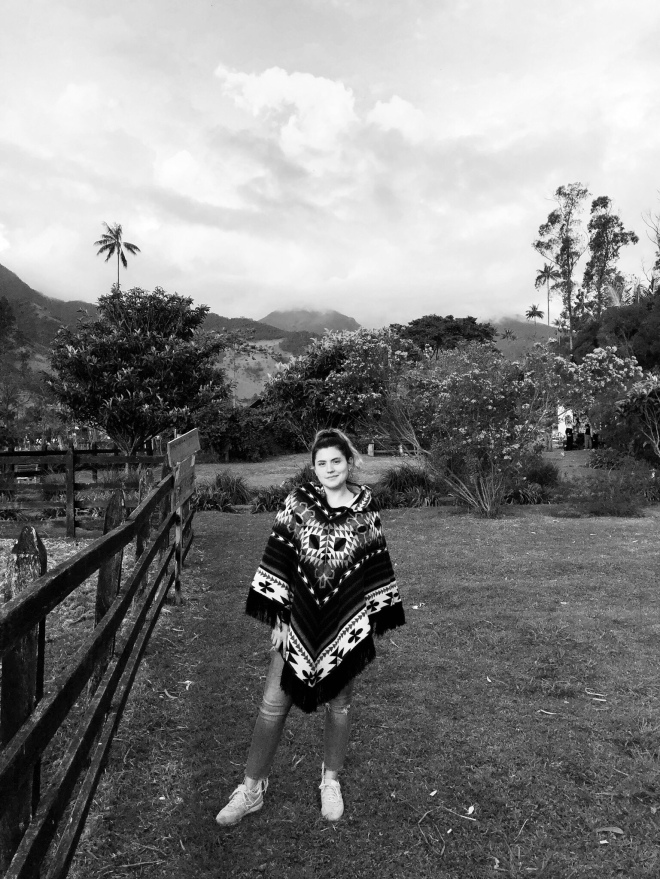
Salento, Colombia - Quinby & Co.
Andrea Pavlov in the Valle de Cocora; Quindío, Colombia

It’s imperative for us to acknowledge this fact and then get to work on changing it. As Ijeoma Oluo, NYT Best Selling Author of ‘So You Want To Talk About Race’ (@ijeomaoluo) so eloquently puts it:

“The beauty of anti-racism is that you don’t have to pretend to be free of racism to be an anti-racist. Anti-racism is the commitment to fight racism wherever you find it, including in yourself. And it’s the only way forward.” 

I have engaged in behavior that I regret, making excuses for family members who “don’t know better” because they’re of an older generation, staying quiet when someone has made an offensive “joke” or has said something ignorant or offensive because “they probably didn’t really mean it.” Colorism was very much a part of being raised Latina.

I now realize the dangers of staying silent and I am committed to actively participating in unlearning the harmful ideologies to which we’ve grown accustomed.  We are talking about racism at home regularly, and addressing our own white privilege. I have addressed these topics with family and we’ve talked about the ways we can be better and change and eliminate colorism from our vocabulary. I have done a “clean up” of my social media feeds, getting rid of accounts that do not serve in uplifting BIPOC and subscribing to new voices I’d never heard before whether they’re in the arts or civic action.  

I recently found Rachel Cargle (@rachel.cargle) who offers a wealth of knowledge and resources for anyone looking to be an ally to BIPOC and specifically Black women, who are the most affected. She founded The Loveland Foundation (@thelovelandfoundation) which provides free therapy for Black women and girls, and she curates a monthly self-paced syllabi at The Great Unlearn (@thegreatunlearn) where she currently has a free 30-day course called #DoTheWork.  I began the course earlier this week, and I’m now on day three.

I really encourage you to do more research, ask questions, learn and unlearn, and when you know better, do better. It is perfectly ok to change your mind when you’ve learned more about a subject. That is how we grow and evolve. These are small steps we must begin taking in order to begin dismantling the systems, institutions and ideologies that continue to negatively affect BIPOC and their communities. 

Black lives matter.  All black lives matter and are beautiful and worthy and deserving. 

We are in this together, friends.  As white people and Latinxs, we must step forward and stand with our Black and Brown family. 

And above all, we must no longer stay quiet.
When is Enough Enough?

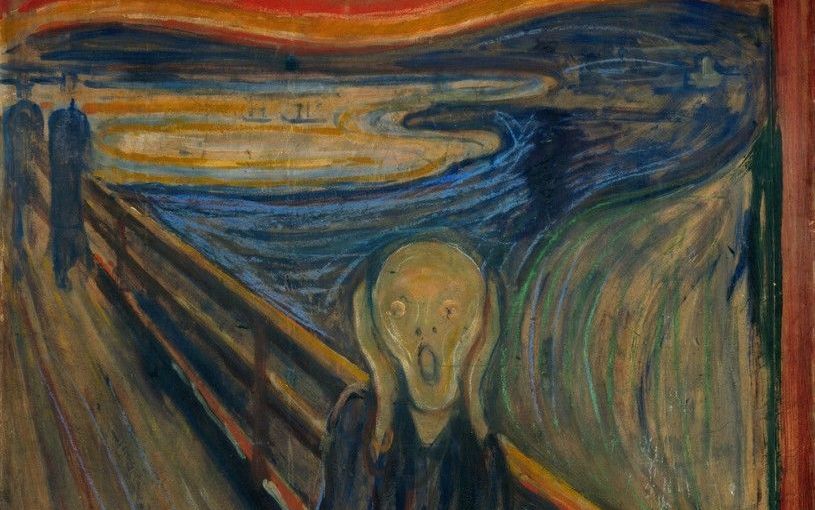
There are those who will simply not listen, who will try and talk over you, shout at you, and maybe even say something ugly to you before they’re willing to even consider whether they are wrong.  In all likelihood, it stems from their own insecurities.  I don’t think you have to be a psychoanalyst to see it.

Granted, some voices out there will encourage you to keep fighting the good fight.  If you think you can do that, then by all means go for it.

But if you find that continuing conversations with those people is adding stress and sadness to your life, people who continually put up a block and care more about being right than the egoless pursuit of truth, then is it still a good idea?

What about with family?  At what point should we decide that enough is enough?  And how should we navigate our relationship with these people considering our different points of view?

Of course, there’s no clear answer because how much of it we’re willing to endure is something only each of us can know.  And while I certainly don’t think it’s necessary to part ways over differing points of view, I do wonder whether it’s more practical to part ways with people who are either unwilling or unable to listen, especially when it’s bringing you pain and eating up both time and energy that could be invested elsewhere.

For one thing, if they’re unwilling to listen, then what kind of relationship is it?  And if they go so far as insulting you, then how responsible are you really for continuing any sort of conversation?

Anyway, what I’ve noticed about these people is that they’re typically the kind who can only work things out themselves, in their own time and their own way.  Besides, maybe there’s a lot more going on with them than you realize.  Then again, maybe not.  Maybe they just don’t want to listen.

Either way, the reasons are mostly–if not entirely–out of your control.  So unless you’re a congressman or lawmaker, if you find yourself giving up on trying to talk to them, don’t beat yourself up over it, because it’s better to save your energy for those who have the mind and the courage to hear out a differing point of view.  And there are plenty of those people who exist, by the way.

One of the greater problems in our society is that many of us are convinced otherwise, as we automatically assume that the people with whom we disagree are hopeless and unreasonable.  It’s a myth, in my humble opinion; one that is encouraged by the manner in which so many of us access information–mainly through social media and the big cable news networks.  But that’s another topic for another time.

Anyway, can we maintain a relationship with people while avoiding certain conversations?  Again, I think it depends on the standards we each set for ourselves, on what we essentially want out of the relationship.

No matter what we decide, I think what’s more important is making the decision not to judge them, or spend any more of your time and energy resenting them or being angry.  Mostly because it’s not going to make anything better.  In fact, it’s only going to damage your own well-being.

Ultimately, what another person believes is their business.  Perhaps what’s most important then, is knowing when it’s time to get back to yours, and seeing to it that your voice is heard.

No matter how we decide to do that, it ought to begin with respect.

A respect that translates into listening.

A personal statement

In recent years, as a rising number of voices far more qualified than my own began speaking out on racism from the standpoint of their personal experience, in movements like Black Lives Matter, I thought it more appropriate to speak less and listen more.

While it was mainly an act of deference, it also partly came from a fear that my own voice might further add to what I viewed as a dangerously monotonous chorus perpetuated by social media, a superficial facade of allegiance rooted less in justice and more in fashion, something I saw as alarmingly characteristic among people–particularly in the white community–in this rising technological and social media age.

While this point of view had some merit, it’s one I can no longer fully practice. I’ve had the opportunity to educate myself more deeply over the last few years, and while that experience certainly continues, my silence has reached it’s end.

I am a musician. I play American music. I often play what some people call Roots music. The term is typically used to group together folk music, jazz and the blues—art forms unique to America that shaped the music we enjoy today, an enduring tradition through which we continually express ourselves.

As such, it’s a useful conduit to understanding the broader history and dynamic character of this country. While all communities have shaped and continue to shape that character, it is critical to understand that Black people specifically laid down this country’s foundations—both literally and to a large extent, culturally. For me, a great part of understanding that foundation has been through the music they’ve given to America, and to the world.

This wasn’t an act of mere patronage on my part. It wasn’t done out of pity or wanting to better understand a community that I viewed as separate from my own, much less from me. It was an act of studying my country and by extension, myself. It’s been an intensely personal, at times painful, and ultimately gratifying experience.

Still, as I continue along this road, which often feels cyclical as well as linear, I’ve returned to one specific realization over the past few weeks. It’s simply impossible for me to continue playing American music without actively speaking out against racism. To do so would be a betrayal of my personal and artistic roots and to the generations of people who profoundly shaped our country and way of life, one that I celebrate every time I sing, or strum the guitar.

I recognize that they aren’t my ancestors, but without question, they are my musical forbearers; and I cannot, I will not turn my back on them. To do so would be to turn away from myself.

So while this is just a brief summary of my own personal experience as an artist and American citizen, my ultimate intention is that is serves as a call to action for anyone still ambivalent about their stake in this country, in something bigger than themselves.

We must fully recognize racial justice as a cause relevant to more than just one community, and recognize the necessity of it being no longer their fight, but our fight. What happens to one of us will and should affect the other. The riots in our cities are living proof of that universal reality, and while I don’t advocate violence, I implore everyone to communicate, openly and with respect, preferably face to face.

To abstain is to compromise not only the welfare and prosperity of one people, but the soul and lasting integrity of our country.

Until these virtues are fully realized, so long as people of color continue to suffer under the tyranny of systemic racism, persecution and oppression, we should–at the very least–expect people to kneel when we sing the national anthem.

____

Resources to Take Action

https://blacklivesmatters.carrd.co/

Al & Dean: Bleeding and Breathing

Al and Dean are two old friends and neighbors who live across the street from one another. Every so often, they’ll get into a little discussion over things. What follows is one of their more recent conversations.

Dean: Hey Al…

Al: Hey Dean, you’re looking kind of blue.

Dean: You been watching the news?

Al: Yea, sure

Dean: The riots…

Al: Yea well, an innocent man was killed by the police before that.

Dean: I know.

Al: You ought to say something about it.

Dean: What, like the way you do?

Al: No, the way you do.

Dean: I don’t have anything to say, man.

Al: That’s not true. I’ve heard you speak. Granted it was like ten years ago.

Dean: Yep.

Al: You’ve been kind of quiet since.

Dean: Yep. I guess I have.

Al: Why is that? Have you really given it much thought?

Dean: Not that much.

Al: Why do you think?

Dean: I think I’m afraid to admit it.

Al: I’m a friend.

Dean: Yea, I know…

Al: Go ahead.

Dean: You know I’ve always had a problem adding my voice to something that I know to be common sense, an obvious truth. What really could I say? People evidently were failing to grasp that obvious truth anyway, no matter how strong and eloquent people spoke about it, and so I felt like anything I did say wouldn’t make a difference.

And the worst part about it was that I started feeling a little numb to it, to the point that a part of me stopped caring. I even turned a little bitter. For one thing, I figured why should I care about anybody outside my family and friends, anyway? They don’t care about me, and I figured few people in the world actually cared about justice–justice for all people–half as much as they let on anyway. Few people genuinely, sincerely care about a complete stranger.

Al: Well I don’t–

Dean: What they do care more about is being right. They care about shaming and pointing fingers, more than they care about having a real discussion with the other side.

Al: Well, wait a minute. What about those voices on the front lines, the ones you were just talking about, the voices I know you still admire, advocating for social justice–

Dean: And doing so far more powerfully than I ever could. So again, what is the point?

Al: I–

Dean: What is the point beyond reassuring those who already know me that I stand on the side of common sense and decency? What are the chances that my voice really contributes anything of value to the many voices already out there making a difference? Or at least trying their best.

Al: Well, how do you know your voice couldn’t make a difference?

Dean: I know.

Al: Why, because you’re white?

Dean: Well, in the end…what do I really know about the suffering they’re going through?

Al: That might be, but that doesn’t mean don’t say anything at all.

Dean: Ok…but where do you want to draw the line of moral outrage when it comes to the history of this country? Because I tell ya, I think once you start down that path, it becomes hard to stop, or at least harder to draw the line.

Al: Hmm…

Dean: But you know, I’m hesitant to say any more on that last point, even now, because I think the truth of the matter is too frightening for any of one of us to face without falling back into the same…well, the same kind of apathy I experienced.

Al: Right.

Dean: You think I’m a creep?

Al: No I don’t.

Dean: No?

Al: No, and I don’t think you’re entirely wrong. But of course, you’re not right either.

Dean: Ok.

Al: First, I don’t think it’s any big secret that apathy is easier to indulge when you’re white. When the cost of inaction isn’t so directly consequential to you that it could mean your life, or the life of a family member. Black people don’t have that luxury because they experience most directly the consequences of inaction.

Dean: Yea. I agree.

Al: Well, there you see…I got this feeling you’ve already made up your mind about speaking out, before we even started this conversation.

Dean: Yes, I think I have.

Al: Right. I mean, nothing I’ve said so far is anything you don’t already know. George Floyd isn’t the first man to be murdered because of race.

Dean: No, he’s not.

Al: So what’s brought you back to wanting to speak up? What’s brought you back from your apathy?

Dean: I can’t pinpoint one specific cause. I think, for one thing, I needed to listen, and make good use of the time to figure out how I wanted to say certain things before I even said them. There’s a lot of noise out there and it’s only getting louder. And so, I think if you’re going to speak out, you ought to make it count, you know? And to do that, you need to figure out how you effectively carry that message across. It’s worth taking some time to figure that stuff out, otherwise it just blends into everything else and adds to a cacophony of noise, which people get numb to after a while. Anything you say goes unheard, and then you’re back at square one, questioning why you even said anything to begin with.

Al: I see, so practicality was more important than principle.

Dean: Well…yea. I guess so. You think I’m a creep?

Al: Of course not.

Dean: What, you don’t believe me?

Al: I do believe you. I just think it’s an interesting admission. I don’t know that I agree, but I do understand where you’re coming from.

Dean: I’m just still a little mixed up about where to start now.

Al: I’ve got some ideas.

Dean: Let’s hear it.

Al: Ok. First thing is to stop being guilty over being white. I’m not saying that you are, but just in case you are, don’t be, because in the end, we’ve got bigger fish to fry.

Dean: Well let’s say I was a little guilty. Can you blame me?

Al: Yes I can blame you. It’s the way you were born, so get the fuck over it. Nobody cares. You mentioned before, “What do I really know about the suffering they’re going through?” The answer is “Little to nothing.” But all of us, to some extent, are limited by the sphere of our own life experiences, and we have far less control over that, I think, than we could ever know. The control we do have begins in our ability to listen and empathize. So listen to people. Really listen, so you can truly begin to empathize.

Dean: I have been.

Al: Yes, but not exactly the way you should be, at least it doesn’t sound that way. It’s gonna be hard to keep listening and internalizing the problems of the world if you’re so busy punishing yourself and feeling guilty all the time. Especially when you’re already a good person. Guilt won’t do anything but inhibit you, so drop it. In the meantime, remember that being white does still enable you, for now, with a greater privilege and political advantage in improving our world, so use it.

Dean: Yea. I hear ya.

Al: Alright?

Dean: Right.

Al: Now, the most fundamental thing to remember is that there ultimately is no them or they. Never has been, never will be. Those are distinctions of our own creation, illusions which have led to humanity’s suffering instead of its progress. So I think it’s important to recognize that black people are not them or they. No matter how much we’ve convinced ourselves otherwise…in the end, there is only us. Our society and history tells a different story, of course, but if a behavior is learned, then it can be unlearned, at least enough to make a lasting difference in our institutions.

Dean: Yea…

Al: When I look at any ‘people’, that is, any community in the world, I see them as my people. First and foremost. And they’re my people because they’re people. This is the most fundamental and universal truth.

Dean: Right.

Al: Second, they are American. My countrymen and women. And as such, an attack on them is an attack on me. That is what a country is, and if it isn’t…then it needs to be.

The riots we see are a result of these basic truths being denied for hundreds of years in what is essentially a violation against nature. And the violence will continue so long as people are denied the basic freedom to be what they are, so long as humanity is kept from living in its rightful state before nature, or if you think this way, before God. Living as equals, each serving his or her own vital role in one life-force that is humanity.

Dean: That’s heavy man.

Al: Yea but it’s really simple.

Dean: So you say…

Al: Begin by unlearning the biases we’ve been taught from our friends, family and media. Divorce yourself from prejudice and recognize the act not as political correctness, but as mere reality.

Dean: How do I do that?

Al: Well I think everybody has to find their own way. Some might turn to books and other resources, while others might consult alternative perspectives elsewhere. For others still, maybe people like you, the decision itself might be enough. Again, everybody is coming from their own specific experience and perspective.  I mean, I think it’s important to remember that outside the laws of physics there is no objective reality, only perception and our ability to interpret data as constructive or destructive. To that point, for thousands of years, we’ve experimented with prejudice and the conclusion is that it’s destructive.

Dean: Agreed.

Al: We are responsible for the world we create, so let’s start by creating a sustainable one, by recognizing that we are all equally human, as equally flawed as we are capable of creating something of beauty and of lasting value.

Dean: Then what?

Al: Then we roll up our sleeves and get to work. If there’s someone in your life who harbors their own prejudices, remember that those prejudices are taught. So they can be untaught. Don’t be so quick to condemn that person or judge them, otherwise that person’s ego is going to step in the way and dig them deeper into their beliefs. The same applies to someone who fell into the same apathy you experienced. The conversation might be uncomfortable, but that’s part of doing the work. Simply speak, and stand up for what you believe. You can be respectful and firm at the same time. You may not convince them, at least not that day. But you will have achieved one thing at least, in the name of decency and creating a better world.

Dean: What’s that?

Al: You weren’t silent.

____

Resources to Take Action

https://blacklivesmatters.carrd.co/

Short Story: The Rain

A short story, which recalls a conversation between Jose Anselmo de la Cruz and Jude Moonlight, on the day Hurricane Irma hit the coast of Florida.

The rain was beating down hard. I heard it coming down mercilessly as the wind howled outside. We sat in the garage, in the dark, our faces glowing in dim candlelight. Through the door, back down the hallway I heard whispers, and the sound of someone laughing. Maybe they were still playing cards. I heard another cracking and fizzing sound. Someone opening another can of beer.

It was only three o’clock in the afternoon, but it felt like three in the morning. I think most of us had lost all track of time by now. Except for Anselmo. He sat there in front of me still, looking somewhere past me, over my head, as though listening for the slightest change in weather, communicating with it in some strange way. He sat relaxed in his chair, smoking his pipe.

I was starting to feel a little high, but not too much. Whenever I smoked, I never got too high. I had a feeling Anselmo was the same way.

“Some storm,” he said.

“Yea. Unlike anything I’ve ever seen.”

“How old are you?”

“23.”

“23. Yea, so you weren’t alive for Andrew.”

“No, I missed that one.”

“Feels like just yesterday. That was the year after I arrived. We had an apartment in Kendall then.”

“What happened?”

Anselmo laughed to himself a bit and kept quiet. He smiled and let out a long sigh before speaking again.

“My wife and I hunkered down in the bathroom. Next morning, when we stepped outside the door…well, we found ourselves outside, looking right through where the wall and part of the roof used to be.”

“Oh man.”

“Yea, you’re telling me. That was some scary shit.”

He laughed again.

Welcome to Florida,” he continued. “I’m surprised we even stuck around afterward, not that we really had anywhere else to go.”

“What kept you here?”

“We hadn’t been overly fond of Houston or New Jersey, and my wife’s family had all moved down here too. So after the storm, we just moved in with her sister for a bit until we found another apartment. Besides, what the hell, I’ve been dodging hurricanes my whole life. I remember when I was a boy, we had quite a few. Seemed like every summer we’d have one or two, at least.”

“In Cuba?”

He nodded.

“That’s what you get living in the tropics,” he said. “But still, even in Jersey, we had to deal with one. Hurricane Belle, I think it was called. 1976. I’d been living there for three years.”

“You’ve got a good memory.”

“I give it a lot of exercise.”

“Do you think a lot about Cuba? Your memories there?”

His face darkened a little as his eyes shot down to the floor. For a second, I regretted asking the question.

“Well, sometimes I do, sure. Of course. I think about the mountains. The beaches. I miss the streets. The people. Hell, I miss just about everything but the politics. I miss the feeling of writing and at the same time knowing, or at least thinking it was going to make some kind of difference, outside of me getting thrown in jail.”

“Do you ever think about writing anymore?”

Anselmo was quiet for a long time before he shook his head.

“No. No, I don’t think I…No, I don’t. I don’t think I ever will. Just never really got that desire again.

“Yea.”

“For one thing, when I arrived in New Jersey, I barely spoke any English. I learned quickly enough, but by the time I had, I was already keeping busy with other things. My family for one thing. My day job, another. Just blending in, I guess. I got real deep into history. American history. I’ve always believed the most patriotic thing a person can do is study the history of their country. It’s the best way to throughly understand it’s character. You can better assess the present and more intelligently influence it’s future.”

“I’ve always liked history.”

“Yea?”

“Yea, I mean, I never really thought of it the way you just put it, or really thought twice at all about why I even liked it, though what you said makes a whole lot of sense.”

Anselmo smiled. “What part of history do you enjoy?”

“The revolutionary generation I think. You know, from 1776 to the first years after the drafting of the constitution.”

“Sure.”

“I’m not exactly sure why…”

“You know, when I think about the founding of this…republic,” he said. “I see a group of highly flawed, yet intelligent men with a vision. They’re so close it, they can touch it. They hold it right in their hands, you know what I mean? Like some raw orb born right out of the soil, strikingly beautiful for having lived so long in the earth and the mud. But it’s hot. It’s way too hot for them to handle, so they hurl it across a vast wilderness.

“Anyway, I think we, as in subsequent generations, we’ve been looking for it ever since, forgetting a little bit more each day what it even looked like, but we add our own experiences to it as a way of filling in the gaps, for better or worse. Though, in the back of our mind, we know we’ll never quite get there in the end.

“But that doesn’t matter. I think as long as we remember where we come from—enough to hold it close and study it, talk about it, shake hands with it, write and sing about it even—and we do it with a lens wide enough to cover our sins as well as our triumphs…then we’ll survive. But I think remembrance is key. Without that, we’re truly lost. We might as well be swinging in the dark.”

I shuffled in my chair. It was all a little hard to believe. I was thinking about the rioting in the streets I’d witnessed just days before.

“What’s the matter?” he asked.

“Well, I’ve seen a lot of violence lately that doesn’t leave me feeling so optimistic.”

“Yea those clips I saw on the news were pretty disturbing.”

“I’ve had mixed feelings about whether it was all necessary.”

“I see.”

“What do you think?”

“Well…I’ve got mixed feelings on riots, or at least revolutions in general, but I favor them if they’re carried out effectively.”

“Seems like a sensible view.”

“–Though easier said than done.”

“–Even if that revolution is carried out violently?”

Anselmo seemed to think long and hard about the question before speaking again.

“I don’t celebrate violence as a means of action and I never will, for the mere reason that we so often feel it’s even necessary in order to be heard, and create the world we want to see. That, in and of itself is a tragedy.

“However, while I don’t celebrate violence, I do accept why people resort to it as a course of action; and I can’t altogether disagree with its usefulness in calling attention to the problems in our society.

“Now, with respect to recent events…let’s say a business owner’s store gets destroyed by people rioting in the streets. He or she has every right to be angry and resentful. I don’t judge them for it. Yet at the same time, I cannot judge the people who destroyed it either. Their anger is real and is the result of being overlooked and unheard.

“Now, in a situation like this, I think both sides are essentially right. But it’s always been difficult for us to accept that sort of complication. We are used to viewing things in a binary way. We’ve always been more comfortable with black and white. One side being right, and one side being wrong. It’s less messy for us that way. Easier to understand.

“Of course, that’s never been the nature of reality. Some thing’s cannot be labeled so neatly. In situations like these, then, it’s less a question of who is right and who is wrong, and more a question of addressing the root causes of why the whole thing happened to begin with.

“Until the root, systemic causes are addressed, we cannot expect peace.”

“Right,” I said. “But in this case, that root cause is racism.”

“You bet. Something intimately tied to the history of this country.”

“I saw a storefront owner get his whole shop destroyed. I knew him. He seemed like a good guy–”

“I’m sure he was. But that really is a basic universal truth seen in action, isn’t it? Right before our eyes. The truth being that we cannot isolate ourselves any longer from racism and hate. It doesn’t matter if you’re a good person. If you’re a good person, you’re still vulnerable. The problems of the world will still, sooner or later, come crashing through your window. It’s a testament to the fact that racism is not merely their problem, that is, the problem of any one community. In fact, it’s never been their problem. It’s our problem, one that all of us need to finally own.”

“Ok, so let’s say we own it. Then what do we do?”

“We destroy it.”

“How?”

“By standing up for it’s opposite, and by facing the people who need to be faced. Not online, but by actually facing them. By talking to them, and communicating the truth of our cause in whichever way will most effectively convince them.”

“And if that doesn’t work?”

“If necessary, we must be ready to defend ourselves and those who need more immediate defending. But never stop trying to speak up, to stand up for the right thing. Communicate always with compassion and basic respect. Violence, ultimately, is a failure of communication.”

“Yea well…sometimes communication just fails.”

“Yes, sometimes it does. But we’ve always had a hand in it’s failure, most specifically when good people do nothing.”

“Yea. I guess that’s pretty true.”

“Yea. It is. So do something. Now.”

canyons at dawn

by Ren Michael

stepping out
from the canyons at dawn
the pain of the world’s
left him humbled and strong
before a breeze
most familiar
and yet brand-new,
he breathes in the view
receiving rhythm and tune

rising from the river
like the birth of the blues
between the symphonic currents
of the beautiful Danube

go with it, friend
and embrace the flow
as you remember again
the things you’ve always known

and never be afraid
for we are one
heart and soul
we’re the bull in the rain,

with a new world to grow


I Can’t Breathe

By Ren Michael

I’ve been told to believe in equality
but if that’s reality, it’s never been seen
when you see a color before you see me
and feel like a target every step up the street

you ought to stay home, don’t give ‘em the bait
keep away from the windows, they’re no longer safe
if you’re gonna be out, don’t make it too late
how calm would you stay? how long would you wait?

I don’t care if you’re hip
I don’t care if you’re woke
I’m not looking to be anyone’s token
Have you felt such rage
You could choke on the pain?
Have I got a friend
who won’t fade away
like smoke in the rain?

how many songs, mantras, manifestos will be written?
you don’t have to leave it to the blowin’ of the wind
we might depend on the poets to express what we know
or say it ourselves in the world that we grow

So you gaze outside at that rain breaking ground, and
you say you won’t abide the same recycled  sounds
that you won’t abide fear in your own hometown
so you’re done with a discourse of making the rounds
are you ready to lay your destiny down?

you say you’ll never know what another man feels
though you may have wounds that never did heal
and you’ll never understand the reason we kneel
until you recognize the wounds as real

I want a country, a home, a creed in which I can believe
A flag and anthem that rings true to me
But I’ve gone too long, unheard and unseen
I’m tired of waiting, and I can’t breathe

Quarantining Solo

We’re all in a similar situation right now regardless of where we are in the world. Stay at home orders are in place, we’re practicing social distancing and patiently waiting for the world to get back to some form of normalcy.

In the spirit of honesty and vulnerability, which can be scary and even physically difficult for me, I’m here to admit that, after seven weeks into self-isolation, when I thought I was totally fine and could handle it all alone, I had a debilitating panic attack. 

Let me preface by saying I’ve never had a panic attack or anything remotely close to one before.  I have even judged others for saying they’ve had one because I never understood the severity of it until now.  It was, by far, the scariest day of my life.  

I’ll spare you the play-by-play details of the experience and sum it up for you like this:

After beginning to feel out of breath while driving, I pulled over to try and slow it down. Then, all at once, I couldn’t control my breathing at all, my heart was pounding harder and faster than I’ve ever felt, my vision began to blur and I could barely feel my body.

For the first time in my life, I thought, “something is terribly wrong and I might be dying.” I began to think about my life, all the people I love the most, my dog waiting for me at home,  that this might be the end and that I was going to be found alone in my car on Vermont Ave. 

Clearly that was not the case, and I later understood the reality of what had happened. I suffered a panic attack.

Thankfully, my boss was nearby and was able to drive me home where I proceeded to stay on the couch for the rest of the day, feeling completely drained and weak. 

This is all difficult for me to admit, and I honestly didn’t really take time to process much of the experience until the next day, after some much needed rest.

For one thing, I’ve always considered myself the “strong friend.” The person my loved ones can seek out to fill their cup, to consult for advice, to whom they can vent whenever they’re going through a bad time.

Even now, with the stress of a global pandemic changing our lives, I’ve had friends and family tell me how “brave” and “strong” I am to be handling everything on my own, but I never really felt like it was that big of a deal.

“I’m fine,” I thought.  “I can handle this, I’m strong and independent and this is all temporary anyway.”

Though this whole experience was definitely a surprise for me, it’s not too hard to understand why it happened. I realize now that I’ve been overburdened and stretched so far thin that my body just broke down. I’ve been doing this whole quarantine alone for the last seven weeks, separated from my partner, my family and my closest friends.  In the midst of these uncertain times, I’m still working full-time, maintaining a home, taking care of my dog and still trying to take care of myself and my own mental health. Reality check, I DON’T GOT THIS LIKE I THOUGHT I DID.

It pains me to admit that I can’t handle it all, that I can’t be superwoman all the time, that maybe sometimes I have to say, “I need help, I need support.” Being in quarantine alone–that is, with no other person or people to be alone with–is really hard.  So now, I realize how essential human contact is for someone like me. I love to love on my people.  I love hugging and holding hands and being held and cuddling and affection and who knew that not touching a single person for over seven weeks for the first time in my 32 years of life would push me over the edge?! Definitely not me. 

Me in ‘Park Avenue’ at Arches National Park, Utah

So now what? What did I learn from this experience that might keep it from happening again?

Well first off, I had an extremely vulnerable conversation with my partner. I opened up to him emotionally in a way I’ve always been too afraid to do, and I immediately felt an immense weight lift from my shoulders.  As obvious as it may seem, I am not quite as infallible as I thought, and simply admitting this fear both to myself and to my loved ones has alleviated that self-inflicted judgmental pressure, the kind that says I need to have everything under control at all times. Ironically enough, admitting that is actually allowing me to take more control than before. I can look at my situation far more objectively, and give myself the break I didn’t know I needed. 

A key to self empowerment is admitting your weaknesses. When you face a fear or personal judgment head-on, you remove its power over you. I’m sure you’ve heard this before but, “what you resist, persists,” and if there’s one lesson I can take from this whole thing, it’s to quit the resistance, let go of expectations and learn to surrender. 

We’re all in this together, so ask for that help when you need it, set those boundaries that give you a break; and for goodness sake, listen to the cues your body is giving you. 

Going forward, I know I will.


Issue #4
Q&Co.


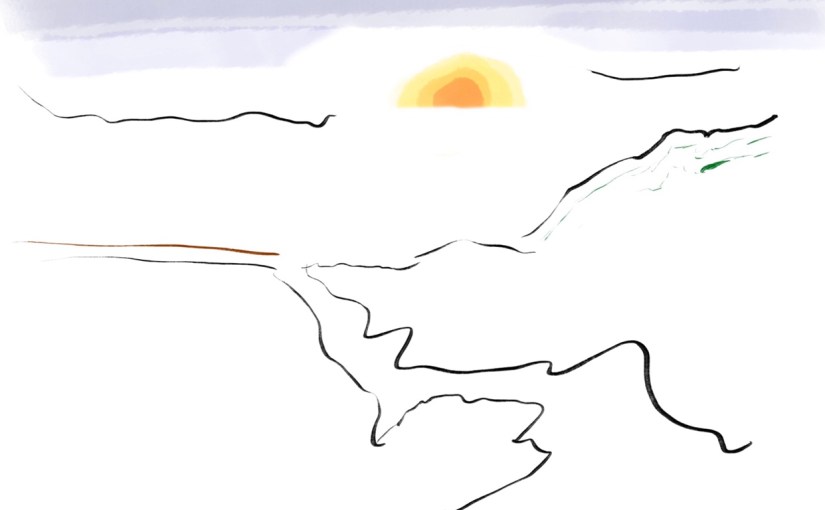
A sketch…a world in flux

It’s a near-complete circle, unfinished at the bottom where the shape begins and ends, as though painted in one swift, smooth brushstroke, left barely disconnected by the painter without any second thought.  I’ve seen it a lot over the past year, as I’ve consistently thought about projects still unfinished, not quite realized. 

‘This Is It’ by Thich Nhat Hanh

Last night I was thinking about sketching.  The first drawing, the rough outline for what’s to come.  The more I think about it, the more I learn to appreciate it; and the more I realize that conception, for better or worse, has always appealed to me more than completion. 

That end result has always been less exciting to me, which I guess is ironic.  Here I am pursuing something and yet—maybe subconsciously—I’m not even in a big hurry to get it.  Maybe it’s a weakness, but it’s one that I embrace.    

There’s nothing like that initial moment where something comes right out from my head and onto the page.  The sketch is raw, still in motion and only just being born.  It’s breathing and you can feel the pulse, as Jude likes to say.

Meanwhile when something is complete, it’s complete.  Done.  It’ll be hung up on a wall, put on record, published in a printing house and maybe admired and talked about for ages to come, or it might be forgotten no sooner than it arrived, but either way it’s finished. 

It might take on a life of it’s own after you and that’s a beautiful thing, but even so, it’s a life that’s separate from you.  The sense of finality isn’t always comfortable, but probably necessary. 

There are only a few things that ever seem to remain constant in my life, anyway.  Like the people I’m lucky to call friends and family, and certain fundamental understandings of life and the universe. 

In my beginning is my end…
In my end is my beginning
-T.S. Eliot, “Four Quartets”

A friend once told me the only thing consistent in life is change.  The sketch, at best, reflects that fundamental truth.   It’s still in flux, still being made.  It’s future unknown. 

Open to possibility. 

Issue #4
Q&Co.

Dried Garbanzo Beans: Three Ways

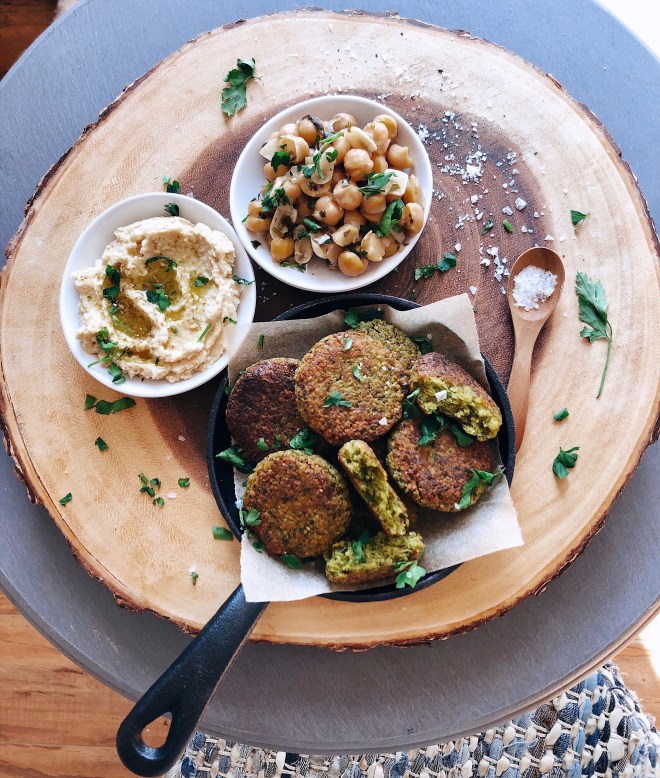
Dried Garbanzo Beans: Three Ways – Cooked Beans, Falafel or Hummus

Well it goes without saying these days have been an adjustment for most of us and we’re all figuring out the best ways to cope with it. As difficult as it can be emotionally and financially, my hope is that most of you are quarantined at home doing the best you can while we wait and see how the days continue to unfold.

I have been in self-isolation for over two weeks now, only venturing out when necessary. The rest of the time, I’ve been home…working some, reading some, and cooking a whole lot more.

Cooking is my coping method. Not only does it keep me busy (sometimes for hours) but it brings me joy, makes me feel useful, and best of all, leaves me with a fridge full of good food to eat for days.

With all of the panic buying that’s been taking place, especially for pantry items/non-perishables, I’m sure it’s left a lot of you with more cans and bags of dried beans than you know what to do with.

But fear not!  I already keep a surplus of dried beans handy and I love to make a big batch for the week to use in different ways.

Here is a quick video I made that uses one 16oz bag of dried garbanzo beans three different ways: falafel, hummus and cooked beans.  See below for individual recipes and notes.

To begin any of the three recipes, start by pouring the bag of dried garbanzo beans into a large bowl and covering with water to soak overnight. Once soaked, rinse them well with cool water.

Falafel

Ingredients:
-⅓ of soaked garbanzo beans (uncooked)
-1 bunch of parsley (remove stems)
-¼-½ cup of any other greens you might have (cilantro, kale, spinach, beet greens, radish greens, etc. this is optional)
-1 medium lemon
-2-4 cloves garlic (depending on your preference)
-half an onion (any variety works)
-salt to taste
-½ Tbsp cumin
-¼ tsp cardamom (optional)
-½ tsp turmeric (optional)
-¼-½ cup flour
-¼ cup cooking oil (grapeseed, avocado, coconut, etc.)
 
 
Method:
 
-Add all ingredients except soaked beans, flour and oil to a food processor and pulse until well combined, scraping the sides down as you go
-Add soaked beans and pulse until combined, continuing to scrape the sides down
-Taste for seasoning and add salt as needed
-Start adding flour a little at a time (you may not need the full amount) and pulse to combine
-Once you have a smooth paste, transfer to a bowl, cover and refrigerate for at least 30 min or up to overnight
-Remove cooled dough from refrigerator and form small discs
-To cook, heat a cast iron or non-stick skillet on medium high with ¼ cup cooking oil (make sure oil is hot before adding the falafel)
-Place falafel discs in skillet (do not crowd the pan) and cook until browned, about 5-8 min per side (you may have to adjust the heat if they’re browning too quickly or not fast enough)
-Place cooked falafel on a dish until all the dough is cooked
-Serve warm over pita bread, with hummus or tahini, with salads or bowls, the options are endless!


Notes: Falafel is typically made with just parsley but I love to add different greens for extra nutrition and just to use up extra greens I might have. I feel that it doesn’t affect the flavor but try it out as you see fit. There are countless recipes using canned garbanzo beans but I have not had much success with any of them. I have found the best method is to use dried beans that have been soaked overnight for the right texture.


Hummus

Ingredients:
-⅓ of soaked garbanzo beans (cooked in water with kombu for about an hour, until tender)
-1 lemon
-2-4 garlic cloves
-3 Tbsp-⅓ cup tahini (optional but delicious)
-about ¼ cup extra virgin olive oil
 
 
Method:
 
-Add all ingredients except olive oil to a food processor and pulse until well combined
-Continue to pulse and add olive oil to the mixture, scraping the sides down as you go
-Continue mixing until very smooth, at least 3-4 minutes
-Transfer to a bowl/container and enjoy!


Notes: I cook the beans with kombu, a seaweed to aid in digestion, it’s totally optional but I have found it beneficial. It does not add any taste or texture to the beans. You can remove the garbanzo bean skins for extra smooth hummus (very time consuming but worth it if you want the smoothest texture.) I prefer to make the hummus when the garbanzo beans are still warm but you can pre-cook them and keep them in the fridge until you’re ready to make it.  If using canned beans, follow the same process but drain and rinse the beans first (they do not need to be cooked ahead of time).


Cooked Beans

Ingredients:
-⅓ of the soaked garbanzo beans (cooked in water with kombu for about an hour, until tender)
-1 shallot (or onion), minced
-4 cloves garlic, thinly sliced
-salt and pepper to taste
-½ tsp dried oregano
-¼ cup parsley or other herbs you have (cilantro, thyme, etc.), chopped
-3 Tbsp extra virgin olive oil
 
 
Method:
 
-Heat oil in a medium pot and add shallot, garlic, salt, pepper and dried oregano, cook until fragrant about 2-3 minutes
-Add juice of lemon and parsley and saute for another 2-3 minutes
-Add pre-cooked beans and vegetable broth
-Bring to a boil and simmer until most of the liquid is absorbed, about 15 min
-Serve warm, over rice or any other grain, in mixed bowls, with salad, etc.
-Keep leftovers refrigerated. You can add to soups or even puree into hummus as well.


Notes: I cook the beans with kombu, a seaweed to aid in digestion, it’s totally optional but I have found it beneficial. It does not add any taste or texture to the beans. You can use canned beans as well just make sure to drain and rinse them well beforehand. This base works well for any type of bean. I love the delicate flavor of the shallots but you can use any variety of onion you might have on hand. You can also add some red pepper flakes if you like it spicy.

Issue #3
Q&Co.