Penetrating the Aether: Are We Listening?

Has social media made us better communicators?

No! Ok I’m not exactly sure, but I’m inclined to think not since it’s removed face-to-face confrontation, a core component of meaningful conversation, from our everyday lives. That’s not to say we were generally good communicators anyway, even before ten or twelve years ago.

Still, I do think social media has aggravated many of our common weaknesses, such as vulnerability to ego, an unwillingness to be wrong, and not listening.

The same can be said for texting but I’ll get into that, as well as social media, some other time. What’s more interesting to me, and likely more important for the sake of cultivating a more prosperous society, are those weaknesses I just mentioned. Besides let’s face it, social media isn’t going anywhere. It’s prevalence in our daily lives is unlikely to change anytime soon. Nor should it.

No, what I think ought to change more immediately is our handling of it, so that it’s presence in our lives isn’t quite as relevant, or at least so it’s less damaging.

To do that we’re going to have to get a better handling on how we have conversations with each other, independent of the platform we use to do it.

All anyone needs to do these days is go on YouTube, and look at the arguments people have with one another in the comments section following any political post. If just the thought of doing that made you cringe just now, you’re not alone. I feel the same way. “Who are these people?!”

That’s just it. They’re us.

While YouTube in particular can seem like a cesspool for vitriol and hate, we can’t be so quick to righteously distance ourselves from them, because at the core of those forums, I think, lie the same fundamental problems that dog even the most diplomatic among us. Ego.

That my friends, is one pesky son of a bitch.

Now let’s just imagine, for a moment, that ego didn’t exist in the world. What would it look like?

Are you smiling yet? Keep trying.

Alright that’s enough. Maybe you didn’t smile. Maybe you’re not the smiling type, and that’s ok. We still love you.

The point I’m trying to make is that most of us go into our conversations and arguments as though it’s a contest. But that’s just it. It’s not a contest. That’s an illusion perpetuated over the last thirty years, with the rise of cable news and programs that pit one person against another like two swordsman representing their warring tribes.

The greatest deception men suffer is from their own opinions.
-Leonardo Da Vinci

We don’t owe our allegiance to our ideology. We owe it to the truth. Granted, the truth is something more abstract if not multi-dimensional, but it’s universal. Thus, the aim for each participant in a conversation cannot be winning, which naturally pits one against the other. The aim must be to arrive at a common truth, which requires working together.

When that happens, we no longer care about being wrong. We’re no longer terrified at the prospect of losing an argument, and why should we be? Really, we don’t lose at all. If you find that you’ve come around to embracing another person’s point of view, you didn’t lose, you just discovered something that you’d overlooked before. You’re a wiser person for it.

There’s nothing to be bitter about. You’ve simply worked together with someone else at uncovering a broader truth. That’s something to celebrate, not scorn.

Finally, when we lose the unfounded fear of being wrong, a third thing happens. We are more able to listen. We’ve removed ego, fear, insecurity, bias and judgement from our point of view; and so we can more adequately listen to the person in front of us, with respect and a clear devotion to something bigger than ourselves.

This might sound like an oversimplification, but it’s really just a small change, a slight shift in our thinking that can make a monumental difference in our society–let alone in our personal relationships–the more people follow through with it. If we remove our ego from the equation, and step out of our own way, we no longer have one hand tied behind our back in how we communicate with one another.

This, I’m convinced, is the essential core of a healthy country and a truly self-sustaining democracy.

__

P.S. for those of you who made it this far, thanks for listening! Here’s a token of our appreciation.
My (Latina) White Privilege

I am Latina.  I am a Woman.  I’m a child of immigrants.  But I am also white facing, meaning I have benefited from white privilege all my life.  While this isn’t news to me, I never really understood the true gravity of such privilege until a few months ago. 

Our Black and Brown communities have been on the receiving end of violence, terror, extreme injustice and racism for hundreds of years.  I have grown up in a system that continues to oppress and quiet BIPOC, along with their respective histories, their achievements, their beauty and most importantly their humanity.

I’ve always considered myself lucky to be a free American.  I was equally lucky to have been raised speaking Spanish at home with family while spending my childhood summers in Colombia, experiencing another culture in a country that is home to vast populations of Black and Indigenous communities. 

I felt like I was part of a diverse and open-minded community.  I still feel that way.  However, the privilege of being white was never addressed, so I was oblivious to how it positively affected my life and, more importantly, how it negatively affected the Black and Brown lives around me. 

While racism runs deep in Colombia–as it does for much of Latin America and the Caribbean–what’s more specifically common is colorism, which is the preferential treatment of those who are lighter-skinned compared to those who are darker, even though both are of the same race.  In Latin communities then, it’s especially common to hear things like, “you’re not Black, you’re [insert country here], or even comments about the type of hair you have, “at least you have good hair,” etc.

As children, we are essentially taught that having lighter skin is more beautiful and that darker skin is less preferred. If you do have darker skin, you are constantly warned, not quite half-jokingly, to stay out of the sun so that you don’t get any darker. 

Even the telenovelas we are so used to watching are filled with light-skinned actors taking up the major roles, while the darker-skinned actors usually portray the ‘help.’ 

And so while I never grew up around any overt displays of racism, I also did not grow up with any understanding of what it meant to be anti-racist, or much less why it is vital.

As detailed above, the society we live in and the system by which this world functions is inherently racist, and built to mainly benefit white people while simultaneously oppressing BIPOC.  As it’s embedded within everything around us, it becomes more natural for us to grow up harboring certain prejudices about people and their skin color without even realizing it.

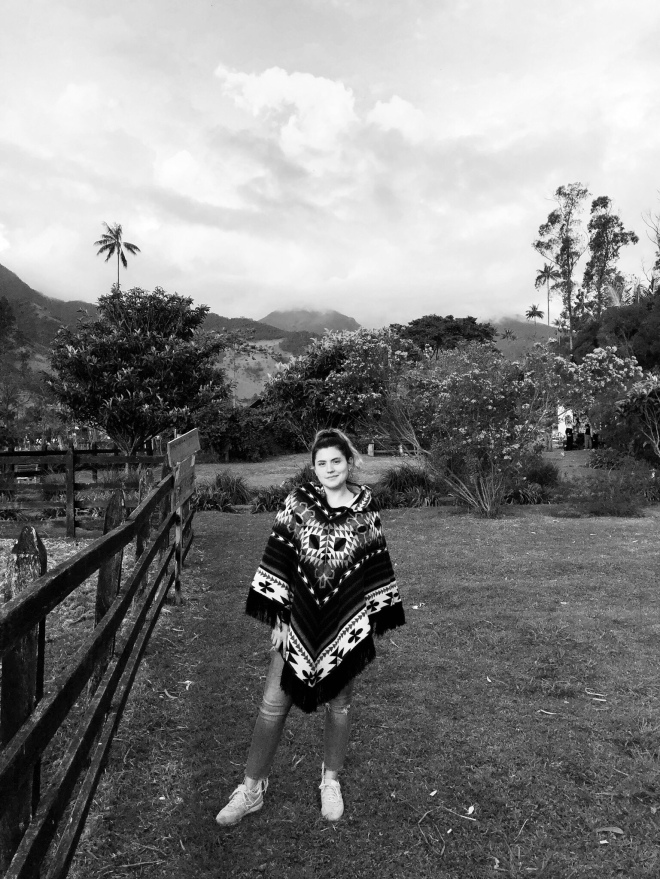
Salento, Colombia - Quinby & Co.
Andrea Pavlov in the Valle de Cocora; Quindío, Colombia

It’s imperative for us to acknowledge this fact and then get to work on changing it. As Ijeoma Oluo, NYT Best Selling Author of ‘So You Want To Talk About Race’ (@ijeomaoluo) so eloquently puts it:

“The beauty of anti-racism is that you don’t have to pretend to be free of racism to be an anti-racist. Anti-racism is the commitment to fight racism wherever you find it, including in yourself. And it’s the only way forward.” 

I have engaged in behavior that I regret, making excuses for family members who “don’t know better” because they’re of an older generation, staying quiet when someone has made an offensive “joke” or has said something ignorant or offensive because “they probably didn’t really mean it.” Colorism was very much a part of being raised Latina.

I now realize the dangers of staying silent and I am committed to actively participating in unlearning the harmful ideologies to which we’ve grown accustomed.  We are talking about racism at home regularly, and addressing our own white privilege. I have addressed these topics with family and we’ve talked about the ways we can be better and change and eliminate colorism from our vocabulary. I have done a “clean up” of my social media feeds, getting rid of accounts that do not serve in uplifting BIPOC and subscribing to new voices I’d never heard before whether they’re in the arts or civic action.  

I recently found Rachel Cargle (@rachel.cargle) who offers a wealth of knowledge and resources for anyone looking to be an ally to BIPOC and specifically Black women, who are the most affected. She founded The Loveland Foundation (@thelovelandfoundation) which provides free therapy for Black women and girls, and she curates a monthly self-paced syllabi at The Great Unlearn (@thegreatunlearn) where she currently has a free 30-day course called #DoTheWork.  I began the course earlier this week, and I’m now on day three.

I really encourage you to do more research, ask questions, learn and unlearn, and when you know better, do better. It is perfectly ok to change your mind when you’ve learned more about a subject. That is how we grow and evolve. These are small steps we must begin taking in order to begin dismantling the systems, institutions and ideologies that continue to negatively affect BIPOC and their communities. 

Black lives matter.  All black lives matter and are beautiful and worthy and deserving. 

We are in this together, friends.  As white people and Latinxs, we must step forward and stand with our Black and Brown family. 

And above all, we must no longer stay quiet.

When is Enough Enough?

There are those who will simply not listen, who will try and talk over you, shout at you, and maybe even say something ugly to you before they’re willing to even consider whether they are wrong.  In all likelihood, it stems from their own insecurities.  I don’t think you have to be a psychoanalyst to see it.

Granted, some voices out there will encourage you to keep fighting the good fight.  If you think you can do that, then by all means go for it.

But if you find that continuing conversations with those people is adding stress and sadness to your life, people who continually put up a block and care more about being right than the egoless pursuit of truth, then is it still a good idea?

What about with family?  At what point should we decide that enough is enough?  And how should we navigate our relationship with these people considering our different points of view?

Of course, there’s no clear answer because how much of it we’re willing to endure is something only each of us can know.  And while I certainly don’t think it’s necessary to part ways over differing points of view, I do wonder whether it’s more practical to part ways with people who are either unwilling or unable to listen, especially when it’s bringing you pain and eating up both time and energy that could be invested elsewhere.

For one thing, if they’re unwilling to listen, then what kind of relationship is it?  And if they go so far as insulting you, then how responsible are you really for continuing any sort of conversation?

Anyway, what I’ve noticed about these people is that they’re typically the kind who can only work things out themselves, in their own time and their own way.  Besides, maybe there’s a lot more going on with them than you realize.  Then again, maybe not.  Maybe they just don’t want to listen.

Either way, the reasons are mostly–if not entirely–out of your control.  So unless you’re a congressman or lawmaker, if you find yourself giving up on trying to talk to them, don’t beat yourself up over it, because it’s better to save your energy for those who have the mind and the courage to hear out a differing point of view.  And there are plenty of those people who exist, by the way.

One of the greater problems in our society is that many of us are convinced otherwise, as we automatically assume that the people with whom we disagree are hopeless and unreasonable.  It’s a myth, in my humble opinion; one that is encouraged by the manner in which so many of us access information–mainly through social media and the big cable news networks.  But that’s another topic for another time.

Anyway, can we maintain a relationship with people while avoiding certain conversations?  Again, I think it depends on the standards we each set for ourselves, on what we essentially want out of the relationship.

No matter what we decide, I think what’s more important is making the decision not to judge them, or spend any more of your time and energy resenting them or being angry.  Mostly because it’s not going to make anything better.  In fact, it’s only going to damage your own well-being.

Ultimately, what another person believes is their business.  Perhaps what’s most important then, is knowing when it’s time to get back to yours, and seeing to it that your voice is heard.

No matter how we decide to do that, it ought to begin with respect.

A respect that translates into listening.

A personal statement

In recent years, as a rising number of voices far more qualified than my own began speaking out on racism from the standpoint of their personal experience, in movements like Black Lives Matter, I thought it more appropriate to speak less and listen more.

While it was mainly an act of deference, it also partly came from a fear that my own voice might further add to what I viewed as a dangerously monotonous chorus perpetuated by social media, a superficial facade of allegiance rooted less in justice and more in fashion, something I saw as alarmingly characteristic among people–particularly in the white community–in this rising technological and social media age.

While this point of view had some merit, it’s one I can no longer fully practice. I’ve had the opportunity to educate myself more deeply over the last few years, and while that experience certainly continues, my silence has reached it’s end.

I am a musician. I play American music. I often play what some people call Roots music. The term is typically used to group together folk music, jazz and the blues—art forms unique to America that shaped the music we enjoy today, an enduring tradition through which we continually express ourselves.

As such, it’s a useful conduit to understanding the broader history and dynamic character of this country. While all communities have shaped and continue to shape that character, it is critical to understand that Black people specifically laid down this country’s foundations—both literally and to a large extent, culturally. For me, a great part of understanding that foundation has been through the music they’ve given to America, and to the world.

This wasn’t an act of mere patronage on my part. It wasn’t done out of pity or wanting to better understand a community that I viewed as separate from my own, much less from me. It was an act of studying my country and by extension, myself. It’s been an intensely personal, at times painful, and ultimately gratifying experience.

Still, as I continue along this road, which often feels cyclical as well as linear, I’ve returned to one specific realization over the past few weeks. It’s simply impossible for me to continue playing American music without actively speaking out against racism. To do so would be a betrayal of my personal and artistic roots and to the generations of people who profoundly shaped our country and way of life, one that I celebrate every time I sing, or strum the guitar.

I recognize that they aren’t my ancestors, but without question, they are my musical forbearers; and I cannot, I will not turn my back on them. To do so would be to turn away from myself.

So while this is just a brief summary of my own personal experience as an artist and American citizen, my ultimate intention is that is serves as a call to action for anyone still ambivalent about their stake in this country, in something bigger than themselves.

We must fully recognize racial justice as a cause relevant to more than just one community, and recognize the necessity of it being no longer their fight, but our fight. What happens to one of us will and should affect the other. The riots in our cities are living proof of that universal reality, and while I don’t advocate violence, I implore everyone to communicate, openly and with respect, preferably face to face.

To abstain is to compromise not only the welfare and prosperity of one people, but the soul and lasting integrity of our country.

Until these virtues are fully realized, so long as people of color continue to suffer under the tyranny of systemic racism, persecution and oppression, we should–at the very least–expect people to kneel when we sing the national anthem.

____

Resources to Take Action

https://blacklivesmatters.carrd.co/

Facing Fear, One Page at a Time

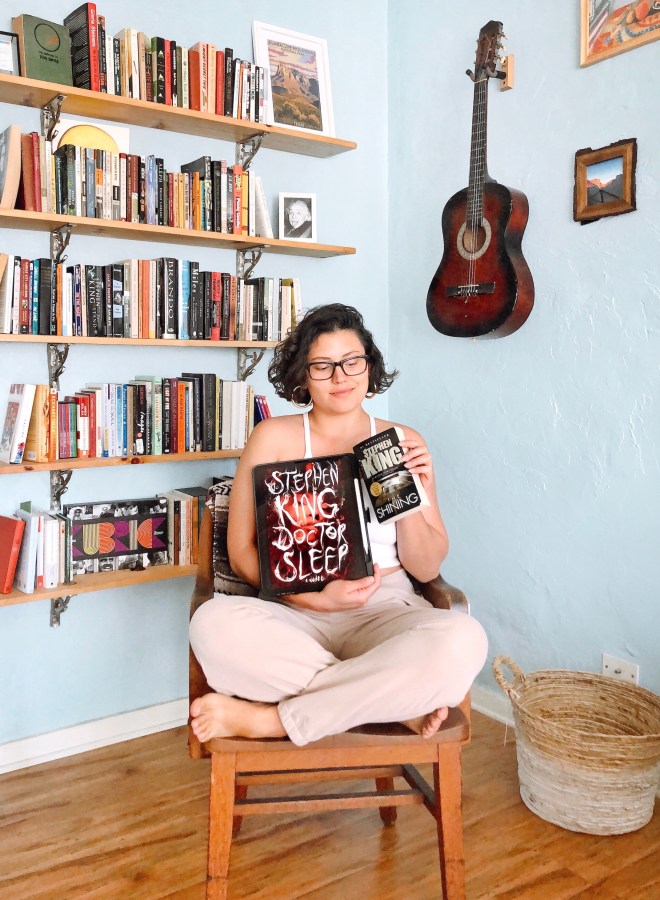
One of the first things to come up in a Google search of Stephen King is that he “is an American author of horror, supernatural fiction, suspense, and fantasy novels.” Now, I’m late to the Stephen King fandom but I always associated the name with just horror, not supernatural fiction, suspense and fantasy.  Therefore I assumed he was just not for me, since I am not a horror fan, whether it’s books, movies, shows, etc. 

What is it about the horror genre that I dislike so much? It’s not so much the fear it invokes while watching the movie or reading the book. It’s the fear that pops up.  For example, during those middle of the night bathroom visits, when it’s pitch black and extremely quiet in my home. All of a sudden, my senses are heightened and my mind begins to think about all the scary things I’ve seen or read about before, making it that much harder to get back to sleep. 

You know that famous shower scene from Alfred Hitchcock’s Psycho? I never even saw the movie before last year, and that scene haunted me for most of my life. Spoiler alert: it’s not even a scary movie. 

My boyfriend, on the other hand, is not only a fan of horror but a huge Stephen King fan, and for the last four years he’s been trying to get me to watch some of his favorite movies and read some of his favorite books…and I finally caved.

I started with the Dark Tower series last year and I zoomed through the first two books. Then I was told how much I’d enjoy The Shining.  I’d never seen the famous Stanley Kubrick movie, but after months of convincing I finally trusted that I might enjoy the book.  

If you’ve ever read The Shining then I’m sure you remember what an incredible story it is, and not so scary after all, at least not until the last third of the book.

The richness and complexity of these characters, and the development of the plot make you feel like you’re a part of this family, slowly being manipulated by the Overlook Hotel. One of my favorite parts of the book is that you empathize so much with each person; which, by the way, was something I felt strongly lacking in Kubrick’s adaptation, which I saw shortly thereafter, but that’s a discussion for another time.  The point is that I was enthralled by the story at every page.  I couldn’t put the book down and it led me straight to the sequel, Doctor Sleep.

Now, I don’t want to give away any spoilers for anyone who hasn’t read either of the books, but let me just say this is one of my favorite stories I have ever read.  I finished Doctor Sleep in about three days and was left in complete and total bliss. I cried at the end, felt so much joy and perfect closure for a story that I got to experience full circle. I felt like another member of the family I’d just spent so much time with and we just said a long and heartfelt farewell to each other. I highly recommend reading The Shining and then Doctor Sleep, back-to-back to get the full effect. 

I finished Doctor Sleep weeks ago and I’m just now starting to feel like I can start another novel. That is the beauty and magic of getting sucked into a phenomenal story, it’s something that stays with you and makes you feel like you were sharing these characters’ experiences because in a way, you were.

I never in a million years would have thought that a Stephen King novel could make me feel like my heart was left wide open in the best way possible. Needless to say, I’m a huge Stephen King fan now, and I can’t wait to read so many more of his books. I’ve realized that the stories and characters are so involved and detailed and that anything remotely scary is really more like an underlying factor.  

So on a final note: This my friends, is why you do not judge a book by its cover.  Or an author by his genre.

PS: Some Stephen King novels I’m looking forward to reading next are 11/22/63, The Stand, The Outsider and, the scariest of them all, IT.  Seriously, who am I?


Issue #4
Q&Co.

Dried Garbanzo Beans: Three Ways

Dried Garbanzo Beans: Three Ways – Cooked Beans, Falafel or Hummus

Well it goes without saying these days have been an adjustment for most of us and we’re all figuring out the best ways to cope with it. As difficult as it can be emotionally and financially, my hope is that most of you are quarantined at home doing the best you can while we wait and see how the days continue to unfold.

I have been in self-isolation for over two weeks now, only venturing out when necessary. The rest of the time, I’ve been home…working some, reading some, and cooking a whole lot more.

Cooking is my coping method. Not only does it keep me busy (sometimes for hours) but it brings me joy, makes me feel useful, and best of all, leaves me with a fridge full of good food to eat for days.

With all of the panic buying that’s been taking place, especially for pantry items/non-perishables, I’m sure it’s left a lot of you with more cans and bags of dried beans than you know what to do with.

But fear not!  I already keep a surplus of dried beans handy and I love to make a big batch for the week to use in different ways.

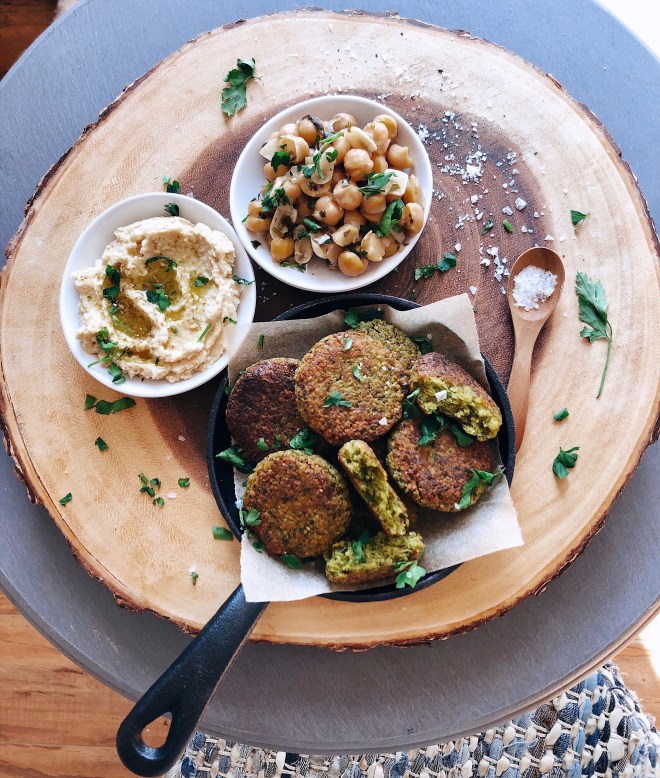
Here is a quick video I made that uses one 16oz bag of dried garbanzo beans three different ways: falafel, hummus and cooked beans.  See below for individual recipes and notes.

To begin any of the three recipes, start by pouring the bag of dried garbanzo beans into a large bowl and covering with water to soak overnight. Once soaked, rinse them well with cool water.

Falafel

Ingredients:
-⅓ of soaked garbanzo beans (uncooked)
-1 bunch of parsley (remove stems)
-¼-½ cup of any other greens you might have (cilantro, kale, spinach, beet greens, radish greens, etc. this is optional)
-1 medium lemon
-2-4 cloves garlic (depending on your preference)
-half an onion (any variety works)
-salt to taste
-½ Tbsp cumin
-¼ tsp cardamom (optional)
-½ tsp turmeric (optional)
-¼-½ cup flour
-¼ cup cooking oil (grapeseed, avocado, coconut, etc.)
 
 
Method:
 
-Add all ingredients except soaked beans, flour and oil to a food processor and pulse until well combined, scraping the sides down as you go
-Add soaked beans and pulse until combined, continuing to scrape the sides down
-Taste for seasoning and add salt as needed
-Start adding flour a little at a time (you may not need the full amount) and pulse to combine
-Once you have a smooth paste, transfer to a bowl, cover and refrigerate for at least 30 min or up to overnight
-Remove cooled dough from refrigerator and form small discs
-To cook, heat a cast iron or non-stick skillet on medium high with ¼ cup cooking oil (make sure oil is hot before adding the falafel)
-Place falafel discs in skillet (do not crowd the pan) and cook until browned, about 5-8 min per side (you may have to adjust the heat if they’re browning too quickly or not fast enough)
-Place cooked falafel on a dish until all the dough is cooked
-Serve warm over pita bread, with hummus or tahini, with salads or bowls, the options are endless!


Notes: Falafel is typically made with just parsley but I love to add different greens for extra nutrition and just to use up extra greens I might have. I feel that it doesn’t affect the flavor but try it out as you see fit. There are countless recipes using canned garbanzo beans but I have not had much success with any of them. I have found the best method is to use dried beans that have been soaked overnight for the right texture.


Hummus

Ingredients:
-⅓ of soaked garbanzo beans (cooked in water with kombu for about an hour, until tender)
-1 lemon
-2-4 garlic cloves
-3 Tbsp-⅓ cup tahini (optional but delicious)
-about ¼ cup extra virgin olive oil
 
 
Method:
 
-Add all ingredients except olive oil to a food processor and pulse until well combined
-Continue to pulse and add olive oil to the mixture, scraping the sides down as you go
-Continue mixing until very smooth, at least 3-4 minutes
-Transfer to a bowl/container and enjoy!


Notes: I cook the beans with kombu, a seaweed to aid in digestion, it’s totally optional but I have found it beneficial. It does not add any taste or texture to the beans. You can remove the garbanzo bean skins for extra smooth hummus (very time consuming but worth it if you want the smoothest texture.) I prefer to make the hummus when the garbanzo beans are still warm but you can pre-cook them and keep them in the fridge until you’re ready to make it.  If using canned beans, follow the same process but drain and rinse the beans first (they do not need to be cooked ahead of time).


Cooked Beans

Ingredients:
-⅓ of the soaked garbanzo beans (cooked in water with kombu for about an hour, until tender)
-1 shallot (or onion), minced
-4 cloves garlic, thinly sliced
-salt and pepper to taste
-½ tsp dried oregano
-¼ cup parsley or other herbs you have (cilantro, thyme, etc.), chopped
-3 Tbsp extra virgin olive oil
 
 
Method:
 
-Heat oil in a medium pot and add shallot, garlic, salt, pepper and dried oregano, cook until fragrant about 2-3 minutes
-Add juice of lemon and parsley and saute for another 2-3 minutes
-Add pre-cooked beans and vegetable broth
-Bring to a boil and simmer until most of the liquid is absorbed, about 15 min
-Serve warm, over rice or any other grain, in mixed bowls, with salad, etc.
-Keep leftovers refrigerated. You can add to soups or even puree into hummus as well.


Notes: I cook the beans with kombu, a seaweed to aid in digestion, it’s totally optional but I have found it beneficial. It does not add any taste or texture to the beans. You can use canned beans as well just make sure to drain and rinse them well beforehand. This base works well for any type of bean. I love the delicate flavor of the shallots but you can use any variety of onion you might have on hand. You can also add some red pepper flakes if you like it spicy.

Issue #3
Q&Co. 

Washing Our Hands

The COVID-19 outbreak leaves me with more questions than revelations about human nature. 

I’m wondering what effect it will have on the world beyond people’s physical health or the global economy, and whether it will change the way we think. If so then how?

Like many people, I’ve long been convinced that the root causes of the world’s most pressing problems are systemic, and not exactly the kind that can be resolved through any sweeping piece of legislation.

That’s not to say the solutions aren’t simple. However, systemic change requires everyone making individual changes not because they are being made to, but because they have internalized, often through personal experience, how and why they should be making the change at all, because they are personally invested in doing so, because they realize they are a part of something bigger than themselves.

That universal realization would most definitely require a shift in the current collective consciousness; and while the shift itself might be simple, how we go about creating it has always proven complicated, because it has less to do with the laws we pass and more to do with how we educate ourselves with respect to the human experience, how we contextualize that shared experience and reinforce it to ourselves on a daily basis.

We’ve always seemed to know theoretically that compassion and respect, listening and sharing each help to create happier, more healthy relationships, and a more sustainable environment for everyone. It’s only in the practical application where we seem to have difficultly.

What’s more is that it only seems to get harder for us as the world’s population grows. How do you get everyone, everywhere, so suddenly and simultaneously, to internalize deeply enough just how tied they are to the person next to them? That the idea of each of us going at it alone, with little to no regard for the other person’s welfare and prosperity, is and always has been a delusional fantasy, especially as the world’s population grows?

It’s likely an easier concept to grasp, say, for crewmen on a ship, or people in a village, or a family in a home. Anyplace where the physical space is smaller and interactions more frequent and visibly consequential.

On the ship you’d be hard-pressed to find anyone who ever questions the point in doing their part, or who gives up on the rest of the crew because they’ve suddenly grown cynical and bitter and tired. They do their part because they know if they don’t, the operational integrity of the ship will suffer.

Yet whether it’s the age-old global issues of war, poverty and racism, or the more recent and very real threat of climate change, the problems we continually face seem directly attributable to the fact that we as a planet lack any real sense of investment in one another.

One might be compelled to look up toward the heavens now in surrender, as if only some sudden, cataclysmic event might serve as the last remaining instrument in creating such sweeping behavioral change.

You’ve probably guessed it by now, but that is exactly what the coronavirus can be; and though it has left many of us justifiably worried, I can’t help but see it as a critical opportunity.

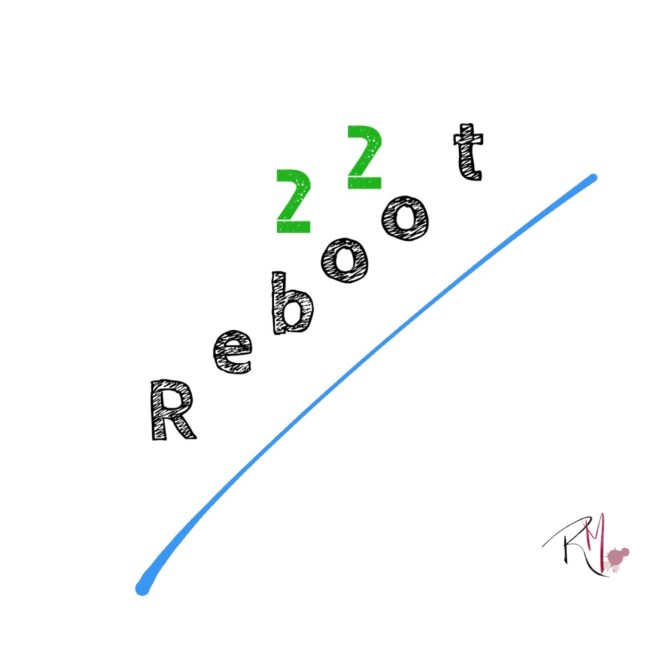
‘2020 Reboot’ by Ren Michael

As the world’s population has skyrocketed over the past 100 years, so too have our technologies.  With our additional advancements in medicine, it’s safe to say that we have grown more inclined to simple solutions for complicated problems, more or less adopting a ‘magic pill’ solution–be it legislation or an actual pill–for problems that can be more effectively, if not even permanently, remedied through fundamental changes in our lifestyle and our collective point of view. 

As technologies have made our daily lives easier and done more of our work for us, whether it’s in how we obtain our food, care for our bodies or solve our geopolitical differences, we have grown less accepting of complication, ignoring the fact that complication doesn’t necessarily mean ‘more difficult.’

And though technology has long been replacing manpower and, by extension, increasingly reducing human interaction and cooperation, the consequences of that trend only seem to grow more evident and critical with every year, leading not just to the atrophy of basic, interpersonal skill sets but more so to the already broadening disregard of our own basic interconnectedness, understandings which are no more spiritual than they are practical and essential to the long-term sustainability of any society or ecosystem.  

Sure enough, that disregard has filtered out to virtually every sphere of public life in the industrialized world.  Remember only a month ago when you’d go out to a restaurant and likely see people at the table looking at their phones instead of each other? 

Remember when images of people walking around in face masks seemed like some distant reality, like something that could never and would never happen here? 

Remember the last time you walked amongst a crowd of people not giving it a second thought?  Without ever considering that someday soon, and for the immediate days following, you suddenly wouldn’t be able to do that?

How often and easily we took our daily lives for granted, our extraordinary privilege to walk alongside each other as friends, strangers, lovers, brothers and sisters.  Personally, I can’t wait to stand in a crowd again without worrying about getting sick and simply walk as just another citizen, another human being, one of many throughout the world who live under one sun, inhabiting a very precious and unique planet.   

I can’t help but feel that physical isolation from one another in recognition of a greater good, in which we are so suddenly allowed time to ourselves if not with the people we love, is exactly what we need at this pivotal hour in our history.  For in taking away something so essential to everyday human life, we may yet learn to appreciate and utilize it more.

In Barcelona, every night at 8:00, residents stand outside their balconies and look out over what is typically a congested street and applaud the country’s healthcare workers. 

While Spain has long been marked by tension between its autonomous communities and the national government, any sort animosity people once felt toward each other, and particularly toward their government, is now gone.

They applaud in Madrid, Seville, Valencia and Pamplona, and in many other cities throughout the country, in a sudden and resounding show of support and solidarity.  

Things have changed.  Circumstances have dramatically altered what once seemed to be an indomitable perspective. 

More than once I’ve pictured myself locked in some conflict with a person I love, with whom it seems there is no conceivable reconciliation until that person is thrust into danger.  An accident occurs and they lie in a hospital bed, at which point all our past disagreements are suddenly revealed to be petty and ridiculous.

Our planet faces a turning point now.  We stand at a crossroads unlike any we’ve encountered before.  Indeed unlike crises of the past, it involves all us, everywhere.  It pays little attention to race, religion, rich or poor, left or right.  East or West.  No, it comes for us all and we can face it together or we can continue as we’ve been, divided. 

So long as there is one good person out there in the world, then there is hope for it.  Fortunately, there is more than one good person.  Fortunately, there are millions, and they form the oldest silent majority in history.   

I’m sure you’re one of those people.  I am one of those people.  Our brothers and sisters are in trouble.  They’re sick.  They’re suddenly out of work.  They’re overwhelmed.  They need us.  I need you. 

We can do our part by staying home not only for ourselves but for others, for those who are in hospitals, and for everyone out there every day because they have to be. 

We can remember that we’re in this together, and that our actions do indeed affect one another. 

If we each do our part, we can and we will get through this.  

Truly now more than ever, there is no them, no they

There is only us.  

Issue #3
Q&Co. 

Fun with Al & Dean: Climate

Al and Dean are two old friends and neighbors who live across the street from one another. Every so often, they’ll get into a little discussion over things. What follows is one of their more recent conversations.

Al: Dean!

Dean: Al!

Al: I got a question for you.

Dean: Shoot.

Al: Let’s say you’re in your house and you’ve got a problem with your pipes. And on the matter you have the option of consulting a plumber, a tailor or a zookeeper.

Dean: Ok

Al: To whom would you be most inclined to listen?

Dean: The plumber.

Al: The plumber, right? Me too. But wait, let’s say the zookeeper came in afterwards, just as you were about to get to work, and said “Ahhhhh. Pay no attention to what the plumber says. It’s all a bunch of mumbo jumbo.” Just to be sure, you consult more plumbers, and they all pretty much agree on what’s causing the problem. Yet still, that zookeeper remains steadfast in his opinion. Who would you be most likely to believe?

Dean: The plumbers.

Al: Me too. But wait, how do you know that the plumbers aren’t just nickle-and-diming you, cheating you, bamboozling you? I mean, they would say there is a problem, right? A pipe problem is good business for them after all, right? They can turn a profit and make some money from the problem.

Dean: I suppose that’s possible, but I figured that was part of the reason I consulted more than one plumber.

Al: Right.

Dean: If they arrive at the same consensus, then there’s little chance they’re trying to trick me and more than likely, they’re just doing their job. More than likely, the simplest explanation is the right one.

Al: Cool, I couldn’t have said it better myself.

Dean: Well that’s why you have me.

Al: Too true. So now let’s say that in today’s current world, that an overwhelming majority of scientists across the world arrived at a consensus which acknowledges that climate change is happening, that it’s caused by human activity, and that it’s changing the planet in a way that is less hospitable to human beings.

Now, mind you, I’m not saying that it is the reality, but let’s just say that it was.

Anyway, scientists around the world arrived at this consensus, and not long after, we began hearing from politicians and businessmen around the world who said ‘Ahhhhh. Pay no attention to what those scientists said. It’s all a bunch of mumbo jumbo.’

Now, if that were the situation, who would you be inclined to believe? Let me ask you this. Historically, who has a better reputation for trustworthiness? Scientists, or politicians and businessmen?

Dean: Let’s just say I would trust the scientists.

Al: I would too. Cool.

Dean: Cool.

Al: But wait! How do you know those scientists are even telling you the truth? How do you know they aren’t cheating you, bamboozling you? I mean, they would say there is a problem, right? That puts the spotlight on them after all, and they so are likely to turn a profit, right?

Dean: Wrong.

Al: What do you mean?

Dean: Well for one thing, like in the situation with the plumber, that’s part of the reason why you would consult more than one scientist. If they seem to arrive at the same consensus, then there’s little chance they’re trying to trick me and more than likely, they’re just doing their job, as the simplest explanation remains the right one.

Al: Ok.

Dean: But even more so, scientists have been and remain anchored in their work by fact. They work to establish objective truths. That’s what they do, and have always done, for societies. That’s why they exist. And so they aren’t beholden to private motivations or opinions, unlike politicians and businessmen.

Al: So now that we’ve ironed out those hypotheticals, I can say here and now that I’ve accepted the fact of climate change indeed happening and being caused by human activity, as it is the scientific consensus of the planet.

Since we have just ironed out those hypothetical conditions, the only possible remaining point of contention between us–the only thing we can possibly debate at this point–is whether or not it is in fact the scientific consensus that climate change is real and being caused by human activity.

And to that point, I will provide for you now a list of sources who agree that our climate is changing due to human activity, and that it’s changing the planet in a way that is less hospitable to human beings. Afterward, if you are still so inclined, please feel free to do your own research using the same deductive reasoning we have here established.  (Below these links are additional resources to take action)

American Meteorological Society (AMS)
https://www.ametsoc.org/index.cfm/ams/about-ams/ams-statements/statements-of-the-ams-in-force/climate-change1/

Climate at the National Academies
https://sites.nationalacademies.org/sites/climate/index.htm

NASA
https://climate.nasa.gov/causes/

The Geological Society of America (GSA)
https://www.geosociety.org/gsa/positions/position10.aspx

American Geophysical Union (AGU)
https://www.agu.org/Share-and-Advocate/Share/Policymakers/Position-Statements/Position_Climate

The American Association for the Advancement of Science (AAAS)
https://www.aaas.org/news/aaas-reaffirms-statements-climate-change-and-integrity

American Chemical Society (ACS)
https://www.acs.org/content/acs/en/policy/publicpolicies/sustainability/globalclimatechange.html

American Physical Society (APS)
https://www.aps.org/policy/statements/15_3.cfm

Fourth National Climate Assessment
https://nca2018.globalchange.gov/

Climate at the National Academies
https://sites.nationalacademies.org/cs/groups/internationalsite/documents/webpage/international_080877.pdf

Australian Government – Department of Agriculture, Water and the Environment
https://www.environment.gov.au/climate-change/climate-science-data/climate-science/greenhouse-effect

IOPscience
https://iopscience.iop.org/article/10.1088/1748-9326/11/4/048002

Climate Change Adaptation: What Federal Agencies Are Doing
https://www.c2es.org/site/assets/uploads/2012/02/climate-change-adaptation-what-federal-agencies-are-doing.pdf

International Panel on Climate Change Fifth Assessment Report, Summary for Policymakers (2014)
https://www.ipcc.ch/site/assets/uploads/2018/02/ipcc_wg3_ar5_summary-for-policymakers.pdf


*Resources to Take Action


Join and Donate to the Sierra Club

https://www.sierraclub.org


Guides to Taking Action in Our Everyday Lives

https://www.climategen.org/take-action/act-climate-change/take-action/

https://www.activesustainability.com/climate-change/6-actions-to-fight-climate-change/


critic at the pulpit

by Cal Corso Art belongs to the people. It always has and hopefully always will. It’s an important relationship, essential to the human experience.  Still it’s most consistent threat comes in the form of the intellectual asserting their expertise and implicitly suggesting some greater understanding of the art than the average person, even though we all have eyes and ears. It’s a role that really shouldn’t exist unless it celebrates the work and it’s potential value to society.  If the work itself is no good then why talk about it at all? Wouldn’t it just add more noise to something that isn’t worthwhile to begin with? Conversation and debate, more so than criticism, should arise from the ideas suggested by the art, and not dwell on whether the work is any good.  Any real complaint or criticism, then, would still manage to stimulate further discussion instead of stifling it.
“Never use a long word where a short one will do.” -George Orwell
I can’t help but notice how these critics are a lot like some religious leaders who take a universal experience, plainly accessible to everyone, and suggest that their perspective on it is somehow more credible than our own, that they are more aware of its complexities–even though these are typically complexities of their own creation. Most of them have never made a film, written a novel, composed music, or contributed anything to the field in which they claim expertise.  What they have done is invent a vocabulary, spontaneously and without any great need for one, a lexicon uniquely tailored to the craft, to a collective experience, that only further reinforces the illusion that they understand it more deeply than we do. Jargon complicates the experience for the layman, reserving it for the elites who invent the language, evidently to perpetuate their own sense of self-importance. In the late 1940s, William Faulkner criticized Ernest Hemingway for his terse style of writing, his limited choice of words. “He has no courage, has never crawled out on a limb,” Faulkner said. “He has never been known to use a word that might cause the reader to check with a dictionary to see if it is properly used.” When Hemingway heard about the criticism, he had his own choice words for Faulkner. “Poor Faulkner. Does he really think big emotions come from big words? He thinks I don’t know the ten-dollar words. I know them all right. But there are older and simpler and better words, and those are the ones I use.” Very often I’ve met people who find art overwhelming, even intimidating, just like they do poetry and certain types of music, like jazz or classical, because they feel it goes over their head.  They get discouraged by their seeming inability to figure out what the artist is trying to say, as if there’s some great big point to it they cannot grasp. Ultimately it’s a product of our own making.  We’ve cultivated a whole industry that assumes the right to decide for everyone else what is good and what is bad, even though there has never been a science in determining something like that, and suggesting otherwise only reinforces the idea of there being some secret language to understanding it in the first place, a language reserved only for the esoteric few instead of the many. There is no big secret, or code, or convoluted way.  The language is universal.  There is only the reaction, our own individual connections to the art, every bit as legitimate as the reactions of the self-proclaimed scholars. I emphasize this because, in this magazine, we’ll be talking about music and films and painting and all kinds of art that we enjoy here at Quinby & Co. We’ll be talking about why we enjoy it too. We will never be talking about something just so that we can give it a bad review and shoot it down.  If you hear any kind of criticism, it will more often address a specific point we feel the work in question is making, one that we feel has broader societal and philosophical implications. If anything, it will try and stimulate debate not on the merit of the work but on the larger points that we have interpreted from it.  Most often, it will be a conversation over ideas.  We are not experts here, but we are passionate about telling good stories that resonate with people, about the tradition of telling stories and understanding why, since the dawn of man, we’ve even bothered to do it all. To that point, we’d like to emphasize our belief that any work of art that stimulates such discussion is still, at the very least, something worthwhile.  Something worth experiencing.  In our humble opinion, it makes for a significant contribution to the times in which we live. Issue #2 / Quinby & Co.

where to begin? Mozart.

by J.L. Quinby

If you’re just getting into classical music, I think the best place to begin would be with Mozart. 

Why?  Because if you can’t get into Mozart, you probably won’t be into classical music.  Yea maybe that’s a crude way of putting it, but I think it’s true; and it’s a testament to the universality of his music, how much it encompassed all that came before and influenced all that would follow.  

Now the best piece to begin with is “Eine Kleine Nachtmusik,” and it’s safe to say that most people in the world have heard this charming little piece of music.  No doubt when you play the first movement in the serenade, you’ll probably recognize it.

But hey, it’s good to start off with something familiar, and this is just an introduction after all.  I think that for anyone overwhelmed by classical music, it’s helpful to begin with what you know, and this is as good a piece as any. 

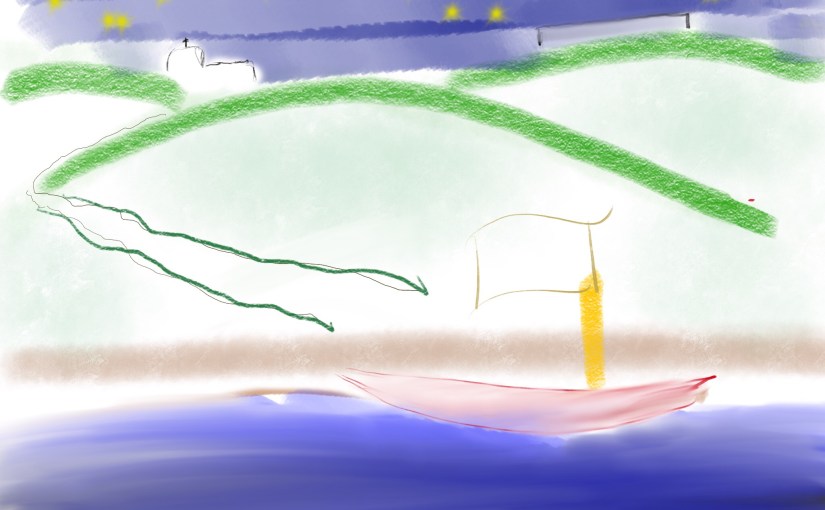
It even feels like a invitation when you listen, like someone welcoming you to a party on some crisp evening by the river, just as the sun sets and the stars begin to appear over the hills. 

I think Mozart understood this well enough.  I can just picture him writing the title after composing it.  “Just a little something I wrote.  In fact, we’ll call it A little night music.”  

Begin with the first piece and let the whole serenade play.   It’s four movements so let them play right one after the other.  Each one is as lilting and lovely as the next.  

By the way, in my humble opinion, the best players of Mozart’s chamber music are Academy of St. Martin in the Fields, conducted by Sir Neville Marriner.

So without further ado, for your listening pleasure…here’s a little night music. We hope you enjoy.

Issue #2 / Quinby & Co.